By MATTHEW HOLT
Strap in for the tale of why your hero is spending most of his life down YouTube rabbit holes of cardiology videos while blundering his way around many many medical centers and exposing many problems with American health care even before he gets close to the operating table. Yes it’s Matthew Holt’s pre-surgical complications – the complications that have arisen before he even gets his failing aortic valve fixed. And yes this will be a multi-parter!
Introduction and a decent bit of context
Last summer after a lot of back and forth I discovered that I had aortic stenosis. (I won’t replay the whole story of how the referral to the echocardiogram didn’t happen three times and therefore I nearly didn’t have the test and therefore never found out because I already have elsewhere)
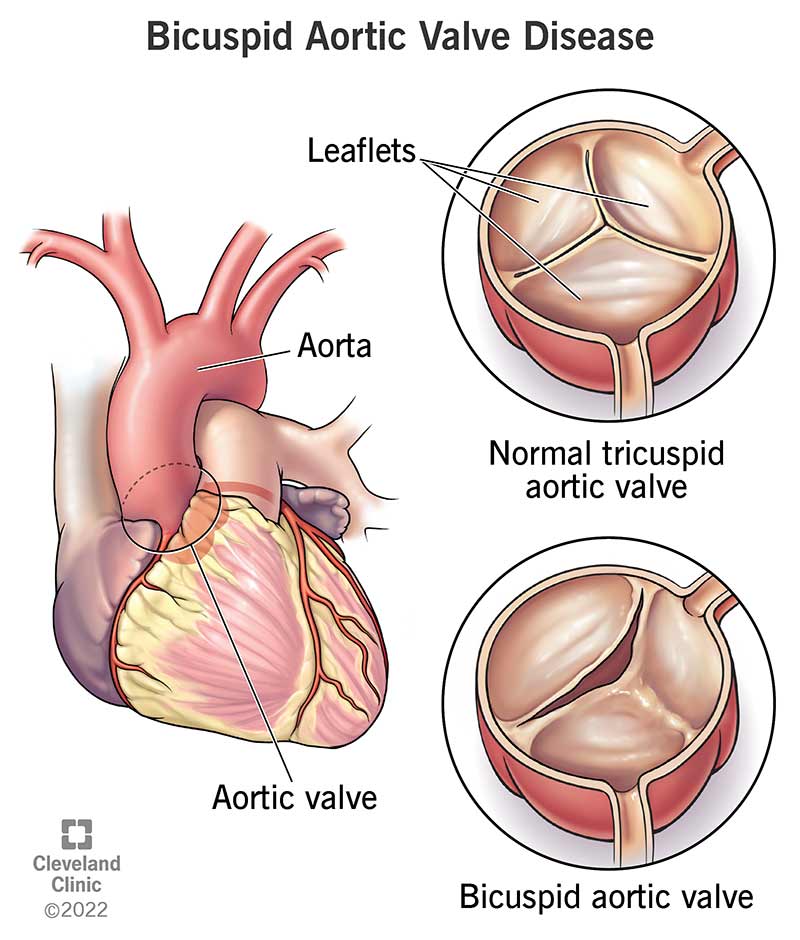
Amazingly this has nothing to do with my bad lifestyle. It’s an inherited heart disease in which the valve that governs the flow of blood between the two main chambers of your heart is starting to fail. Often that means people get very short of breath, start to faint or have severe chest pains but in my case I had none of that. What I did have was the measurement on an echocardiogram showing that my aortic stenosis was “severe” because I have what’s called a bicuspid aortic valve. This is a genetic defect that my father landed me with–well I’m blaming my father but who exactly knows as he’s dead!
Essentially instead of having three leaves on the valve (like a Mercedes symbol) I have two and over time they’ve been steadily picking up more calcification and opening less. That means that more and more pressure is required from the heart to squeeze blood between the two chambers which is bad for the heart and by extension bad for me. That’s pretty strong agreement amongst cardiologists that if you can get this condition fixed before you become symptomatic it’s better than waiting. If you get symptomatic, it’s urgent and your chance of a heart attack and death becomes pretty high (like 25-50% a year!)
But of course it’s not that simple – either from the standpoint of getting it fixed or from the standpoint of how to get it fixed within the American health care system in all of its beauty. And you can expect it, as it’s me, to hear a lot about customer service, insurance, online access to information and of course interoperability. There might also be some AI thrown in for good measure!
So our story starts with me getting the results of the initial echocardiogram. I of course put that report into ChatGPT and later Claude and after finding out what it meant I discovered there were basically two main treatments for aortic stenosis, either something called a TAVR (Transcatheter Aortic Valve Replacement) or open heart surgery. A TAVR is essentially similar to a stent in that the artificial valve is put in a catheter up your leg and opened up in the place of the current valve, pushing that to the side. Open heart surgery, or a SAVR (Surgical Aortic Valve Replacement) – is what it sounds like: they open up your chest sternum and then cut into the heart, taking out the old valve and sewing in a new one.
I saw the echo report in Mychart. And then heard nothing for weeks from anyone either at Marin Cardiology where I had the Echo or from my PCP team at One Medical. To be fair, I didn’t push for much and I had a secret backup plan involving my friends at Included Health which (among other things) has an expert second opinion service. They got me an early opinion from one of their expert cardiologists, Dr Alan Yeung at Stanford. His comprehensive report basically laid out the two alternatives and said that because I was young (yes this is the only area in which I’m considered young these days) the guidelines suggest that I should have open heart surgery. He also suggested that I stop vigorous exercise including snowboarding. Of course I ignored that advice and decided that I would get a TAVR at the end of the ski season and, because it has been bothering me for a while, a knee replacement in the summer.
I met with my PCP at One Medical and was referred to Dr Sammy Elmariah, his favorite cardiologist at UCSF.
That referral actually went very smoothly. I was invited by phone, and then found on my UCSF MyChart that I had a bunch of appointments and imaging set up for late January. That first day I had what’s called a gated CT where they basically look at your entire body and see whether you could be eligible for a TAVR including whether your arteries are strong enough, but also they look at your heart. CHatGPT told me I was fine for the TAVR.
I then met with Dr Elmariah at UCSF Cardiology, He basically told me that he wouldn’t do a TAVR on me and that I should have surgery. (As part of the cardiology consult they also book you a consult with a cardiac surgeon, in this case Dr Ramin Beygui). Dr Elmariah’s team also suggested I get another echocardiogram and were able to get me one that day including getting prior authorization from Blue Shield of California within a couple of hours. I was actually pretty impressed.
The January echocardiogram showed no progression from the previous August. A few days later Dr Beygui had a video call with me. He was late –and to be sure I don’t mind as I know the time of a cardiac surgeon is way more valuable than mine but it’s ironic as to what happened next–and told me that I should have the open heart surgery via a mini Sternotomy. He was, I felt, pretty blase about the impact of this on my life and didn’t seem to care that I was looking for a TAVR. Most people in the Reddit heart valve replacement subreddit seem to think that a stenotomy puts you out of commission for between 8 and 12 weeks. Given the TAVR is more or less a one-day procedure and everyone’s fine at the end of week one I was still a bit unhappy about the fact they wanted to go with the open heart surgery approach. But as it turned out it’s much more complicated than me just being too young.
I essentially told Dr Beygui I would consider getting the open heart surgery if either it became symptomatic or if my next echo was much worse.
About a month later another video visit was put on my calendar at MyChart at UCSF with Dr Beygui for late on a Friday afternoon. I’m not quite sure why. As it happened I was in Tahoe that week and the Friday was a fantastic powder day during which I’d been snowboarding for about 6 hours and having an amazing time. And feeling great, other than my battered knee hurt.
The knee in question is suffering the after effects of me going one side of a tree and my snowboard going the other back in 2002. After a lot of surgery back then and holding it together I hurt it again a few years back and it is now what is known as “bone on bone”. It’s not unusable and I can still patch it up and snowboard on it, but it certainly isn’t great. I have met with Dr Stefano Bini, the king of new knees at UCSF, many times due to his working in digital health over the years. At virtually every cocktail hour he grabs my leg, plays with my knee and says “come on Matthew, you need to get this replaced”.
Hence my original plan was to get the TAVR in the late spring and to get the knee replaced in the summer, making me ready to go for the next snowboarding season.
Obviously the recommendation from the UCSF Cardiology team to not get a TAVR and instead have the open heart surgery with its concomitant longer recovery was not exactly meshing with my plans.
(Part 2 coming soon)
Matthew Holt is publisher of THCB
from The Health Care Blog https://ift.tt/yM2JiDg
via IFTTT
0 Comments:
Post a Comment